The complaint itself is never the problem; what matters is how you choose to respond to it.
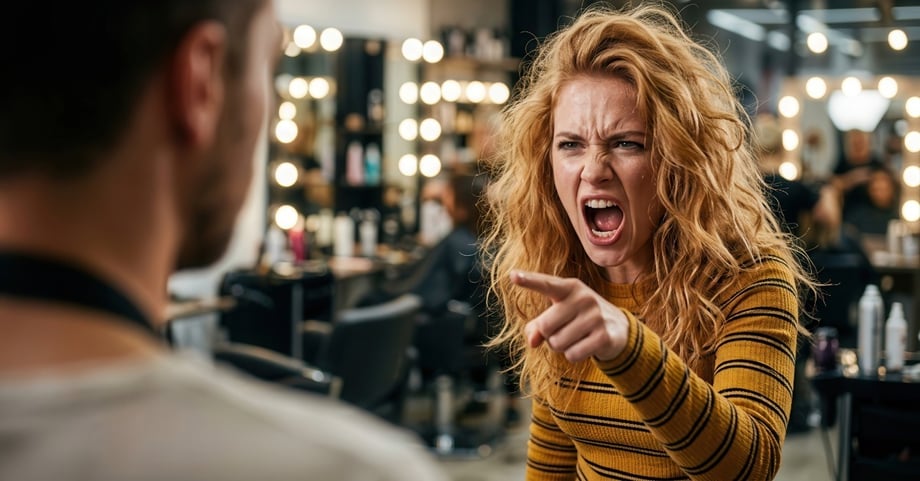
Every salon gets complaints. Even the most talented stylists and the cleanest, warmest spaces hear from clients who leave unhappy. A color that reads too warm, a wait that ran long, a price that surprised someone at checkout. These moments are normal, and they are not a sign that a team failed. Learning to handle client complaints in a salon with a steady process is what keeps those clients coming back.
What separates a good salon from a great one is the response. When a client speaks up, they want three things: to be heard, to be taken seriously, and to receive a clear next step. Give them that, and a complaint becomes a chance to keep the relationship instead of losing it.
In fact, 56% of consumers rarely complain about a negative customer experience and quietly switch to a competitor instead. This means the clients who do speak up are giving the salon a gift.
This guide lays out a repeatable process the front desk and service providers can use every time. It covers what counts as a complaint, eight practical steps, and how to respond to salon complaints professionally online.
What Counts as a Complaint in a Salon
Not every piece of feedback is the same, so it helps to sort complaints into clear types. Knowing the category tells a team who should respond and how fast. Learning how to deal with unhappy salon clients starts with reading the situation correctly.
Service Result Concerns
These involve the finished work: a cut that feels uneven, color that missed the target, extensions that slip, nails that chip early, lashes that fall out, or skin services that did not deliver. Result concerns usually need a technical fix or an honest conversation about what is possible.
Experience Issues
These cover everything around the service: long wait times, a noisy room, a space that felt too cold or too warm, cleanliness, or a staff interaction that felt cold. Experience complaints rarely require a refund. They require acknowledgement and a small gesture that shows the client was heard.
Pricing and Expectation Gaps
A client expected one number and heard another at checkout. This usually traces back to a consultation that skipped the cost conversation. Clear pricing upfront prevents most of these.
Sensitivity Reactions and Safety Concerns
Redness, burning, itching, or an allergic response after a chemical or skin service. These are the most serious. They call for immediate attention, careful documentation, and, when needed, a referral to a medical professional.
8 Steps to Handle Client Complaints Professionally
Use these eight steps as a shared playbook so every complaint gets the same calm, professional response, whether it lands at the front desk or in a stylist's chair.
Step 1: Pause and Listen Without Defending Yourself
The first instinct is to explain or protect the stylist. That instinct should wait. Let the client finish their full thought before anyone says a word. Keep the tone even, the posture open, and the face calm.
Reflective listening works well here. Repeat the main concern back so the client knows it was heard. Try this: "Thank you for telling me. I want to understand exactly what felt off so we can make it right." That single line signals respect and lowers the temperature fast.
Step 2: Acknowledge the Feeling and Apologize for the Frustration
A team can apologize for someone's experience without admitting the service was wrong. There is a difference between "I am sorry the color turned out badly" and "I am sorry this has been frustrating." The second respects the client while facts are gathered.
People calm down when they feel respected. A short, sincere apology usually defuses most of the tension in the room. Try: "I am sorry this has been frustrating. Let's go through what happened and what you would like to see instead." These are simple salon customer service tips that work in almost any situation.
Step 3: Ask the Right Questions to Get a Clear, Fixable Issue
Move the conversation from emotion to specifics. Good questions turn a vague complaint into something a stylist can act on.
- "What part are you unhappy with specifically?"
- "When did you notice it?"
- "What would a better outcome look like to you?"
- "Do you have a reference photo or example?"
- For reactions: "What symptoms are you having, and when did they start?"
The reference photo question is especially useful. It reveals whether the issue is a true miss or a difference between what the client pictured and what was realistic for their hair or skin.
Step 4: Check Your Records and Set Expectations Using Facts
Before promising anything, review the file. Look at consultation notes, color formulas, before and after photos, service history, timing, and any home care recommendations given at the visit.
This step separates a preference change from a genuine mistake. If a client asked for one shade and now wants another, that is a new service. If the notes show the salon missed the agreed result, that is a fix the salon owns. Keep the language neutral and specific: "Your notes from the consultation say we agreed on a soft caramel, and here is where we landed."
A client matching and profile system can make this step faster, since preference and consultation notes are already tied to the guest's record before they even sit down.
Step 5: Offer Two or Three Clear Solutions, Not a Debate
Give the client options instead of arguing over one answer. Choices feel fair and keep the salon in control of the outcome. Match the offer to how serious the issue is and how much time has passed.
|
Situation
|
Reasonable Solution
|
|
Minor tone or shape issue, within days
|
Complimentary adjustment on that element
|
|
Client changed their mind on the look
|
New service, standard or discounted rate
|
|
Clear service miss on the salon's side
|
Free fix, service credit, or partial refund
|
|
Maintenance or home care issue
|
Product exchange plus education
|
|
Sensitivity or safety reaction
|
Stop service, document, and refer out if needed
|
Present two or three of these, then let the client pick. Getting service recovery right pays off. This idea traces back to what researchers call the service recovery paradox, first documented by Harvard Business School researchers in 1990: a customer who experiences a well-handled failure can end up feeling more loyal to a business than one who never had a problem at all.
Knowing how to resolve salon service issues this way protects both the relationship and the revenue.
Step 6: Use a Simple Service Recovery Script and Confirm the Next Step
Once the client chooses, restate the plan in one clear sentence. This makes it feel official and removes any doubt about what happens next.
Confirm three things: what the salon will do, when it will happen, and what it costs. Then confirm who they will see and how long it will take. Try: "Here is what we are going to do. We will book you for a 30-minute adjustment on Thursday at 3 p.m., and there is no charge for that visit." Short, specific, and calm.
Step 7: Document the Complaint So the Team Stays Consistent
Write it down every time. A quick log protects staff, clients, and the business, especially across multiple locations or busy weekends.
Record the date, the service, the provider, what was promised, any photos, the products used, and the resolution offered. Share these notes inside a system, not through gossip at the front desk. When several team members serve the same guest, shared records keep everyone on the same page and prevent repeat mistakes.
Step 8: Follow Up and Turn the Complaint Into Retention
The fix is only half the story. A short follow-up shows the client the salon cares for them after the appointment ended. Reach out a few days later by text or email.
Try: "I wanted to check in after your adjustment. How is everything wearing and feeling now?" Invite honest feedback and confirm the client is satisfied. If they still are not happy, offer one more conversation or a manager review before deciding whether the relationship is a fit. Consistent follow-through separates salons that keep clients from those that quietly lose them, and it's part of the same client retention thinking behind how salons build lasting loyalty with the right tools.
Handling Complaints Online: Reviews, DMs, and Public Comments
Public feedback needs a different rhythm. Speed helps, but arguing in the comments never does. The goal is to look calm, fair, and human to everyone else reading.
Respond Quickly and Move It Offline
Reply within a day when possible. Thank the person, apologize for the experience, and invite them to reach the salon directly. Keep it short and professional so the exchange does not turn into a public back-and-forth.
Use a consistent template: "Thanks for your feedback. We are sorry to hear this. Please contact us at (method) so we can look into it and make it right." That reply tells the writer the salon cares and tells future readers concerns are taken seriously.
Compare Your Response Channels
|
Channel
|
Best For
|
Pros
|
Key Consideration
|
|
Public review reply
|
Google, Yelp
|
Shows accountability to future clients
|
Keep brief, move detail offline
|
|
Direct message
|
Instagram, Facebook
|
Private, faster resolution
|
Save the conversation for records
|
|
Phone or in person
|
Serious or sensitive issues
|
Warmest, most personal
|
Follow up in writing afterward
|
Frequently Asked Questions
How fast should a salon respond to a complaint?
Respond in the moment for in-person concerns and within 24 hours for online reviews or messages. Quick acknowledgment lowers tension and shows the client their feedback carries weight.
Should a salon always offer a refund?
No. A refund is one option among several, and it fits best when the salon clearly missed the agreed result. Adjustments, service credits, and product exchanges usually resolve the issue while keeping the relationship intact.
What if the client is being rude or unreasonable?
Stay calm and stick to the process. Acknowledge the feeling, offer clear options, and set a boundary if behavior crosses a line. Some relationships end respectfully, and that is acceptable.
How does a team stay consistent on complaints?
Write a short policy, document every complaint the same way, and store notes in a shared system. Consistency across staff and locations is what keeps small issues from becoming repeat problems.
Do most unhappy clients say they are upset?
Not always. Many say nothing and simply book elsewhere, so treat every complaint received as valuable insight into what needs attention.
A Repeatable Complaint Process Builds Trust
Complaints will keep coming, and that is fine. What earns loyalty is a steady, professional response every single time. Pause and listen, acknowledge the feeling, ask sharp questions, check the records, offer clear options, confirm the plan, document it, and follow up. Those eight steps work at a single chair or across a multi-location brand.
Write these steps into a simple, one-page policy and train every team member on it. When the front desk and the providers respond in the same calm way, clients notice, and they stay.
Platforms like Join MYA can support that consistency by keeping client communication and team notes organized in one place, so a salon can turn hard moments into lasting relationships.




Comments
0 Comments