
Introduction
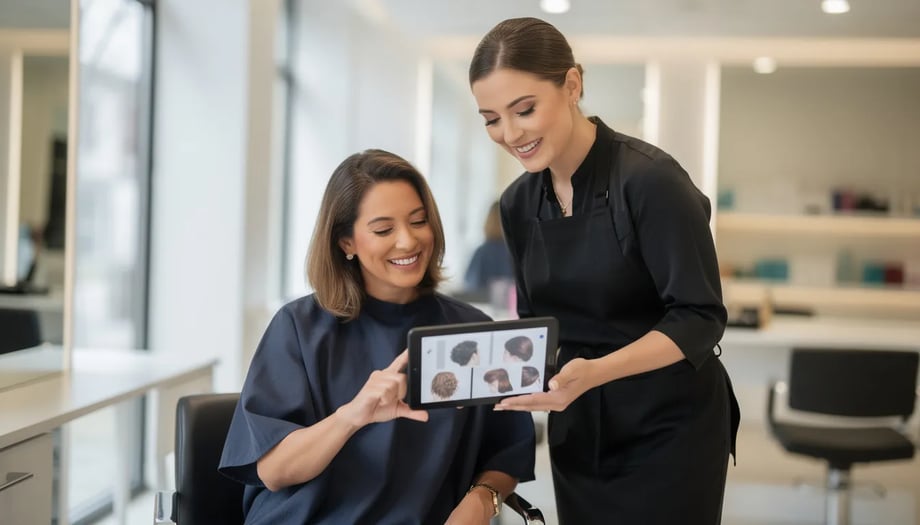
In today’s rapidly evolving salon industry, the difference between thriving and merely surviving comes down to one critical factor: how well you optimize the client journey from click to chair. This article is designed specifically for salon owners and managers who want to elevate their business by intentionally designing every step of the client experience—from the very first online interaction to the all-important post-visit review.
Scope: We’ll cover the full client journey, starting with the initial click (on Google, Instagram, or another channel), moving through website engagement, booking, the in-salon experience, and ending with follow-up and reviews. You’ll learn actionable strategies to optimize each stage for higher retention and more 5-star reviews.
Why it matters: In 2025–2026, salons that fail to map and optimize the entire client journey risk falling behind in retention, reviews, and revenue. Acquiring a new client costs 5–7x more than keeping one, and over 60% of salon revenue comes from repeat customers. By focusing on the journey, you’ll reduce acquisition costs, boost loyalty, and outperform competitors in local search.
Target keyword: This article will show you how to optimize the client journey from click to chair for higher retention and reviews.
Definition: The customer journey is the process a customer goes through from awareness to purchasing and beyond. Businesses must map the entire client journey to optimize the experience.
Key Takeaways
The salon industry in 2025–2026 is undergoing a major shift. Salons that don’t intentionally design every step of the client journey—from the first Instagram click to the post-visit follow-up—will fall behind on retention and reviews. Here’s what you need to know:
-
The client journey is now hybrid: Google or Instagram click → website → quiz or booking → first visit → follow-up. Every touch point either builds trust or burns it.
-
The customer journey is important: It underpins both customer acquisition and brand loyalty, serving as the process a customer goes through from awareness to purchase and beyond.
-
Seamless omnichannel support is essential: Providing integrated experiences across website, social, mobile, and other channels ensures consistent client interactions at every stage.
-
Personality matching matters as much as technical skill: Clients who connect with their stylist’s communication style and vibe are far more likely to rebook, leave positive reviews, and increase their average ticket.
-
Acquiring a new client costs 5–7x more than keeping one: Customer acquisition is more expensive than retention, and optimizing the journey reduces acquisition costs. In 2024–2025, salons report that over 60% of revenue comes from repeat customers. Fixing retention leaks is faster than filling the top of the funnel.
-
Tools like MYA (JoinMYA.com) help salons boost conversion from website visitors, retain more clients after visit one, and grow faster with better-fit matches from the very first appointment.
-
Reviews drive discovery: More 5-star reviews directly boost your ranking in local search results, bringing in more potential customers without extra marketing spend. Optimizing the client journey not only improves retention but also builds brand loyalty.
Ready to improve client retention and transform your salon experience? See how MYA can help — Book a Free Demo Today.
From Click to Chair: Why the Client Journey Is Your New Profit Engine
Picture this: It’s a Tuesday night in 2025. A potential client scrolls through Instagram and stops on a balayage reel from a salon 15 minutes away. She clicks the link in bio, lands on a website that loads in under two seconds, takes a quick personality quiz, and books an appointment with a stylist who sounds like a perfect match. She shows up the following Saturday, slightly nervous. Within the first 10 minutes in the chair, she decides whether she’ll ever come back.
That entire sequence—from social media scroll to rebooking decision—is the modern salon client journey. The customer journey is important because it is the process a customer goes through from awareness to purchasing and beyond, and optimizing it is key for both customer acquisition and brand loyalty. And it’s where your revenue is made or lost.
Here’s the math that should keep every salon owner up at night:
-
Acquiring a new customer costs 5–7x more than retaining an existing one. Every first-time client who doesn’t return represents wasted marketing spend.
-
Over 60% of salon revenue in many markets comes from repeat business. Your existing customers are your profit engine.
-
Average Google review scores directly influence booking volume. In 2024–2025, salons with 4.7+ stars consistently outperform competitors in local search visibility.
The customer journey isn’t just what happens during the haircut. It’s every touchpoint from the first click to the post-visit text message. It’s the entire customer journey, and salons that engineer each step will unlock sustainable growth while competitors scramble to fill empty chairs. Improving the customer journey helps customers learn about your salon, products, and services, and keeps them moving seamlessly toward booking and rebooking, which boosts both customer acquisition and brand loyalty.
If you’re still relying heavily on phone calls, walk-ins, and random stylist assignments, you’re already losing ground. The salons winning in 2025 treat their client journey like a sales process—designed, measured, and continuously improved.
The rest of this article walks through each stage of that journey, shows you where revenue leaks happen, and explains how personality-based matching with MYA can plug those leaks.
Understanding Customer Lifetime Value in Your Salon
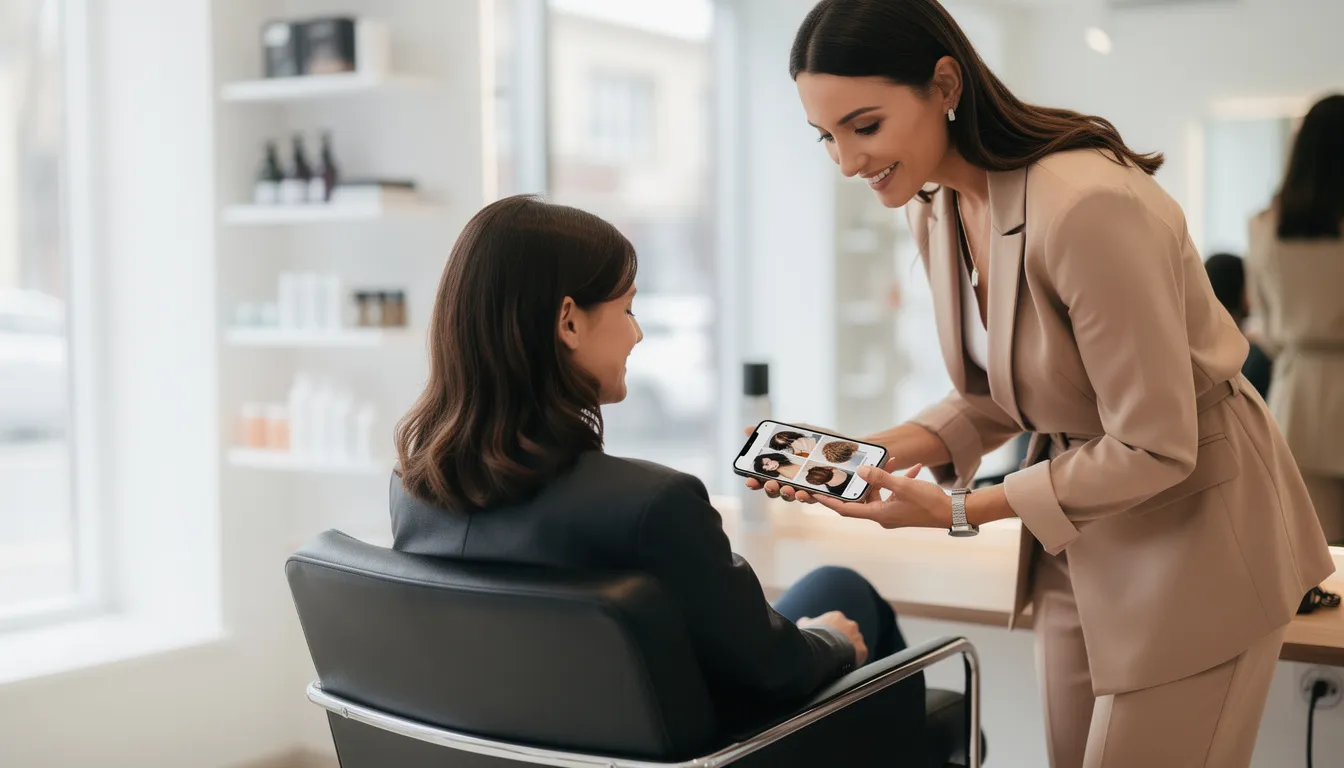
Customer Lifetime Value (CLV) is one of the most important numbers every salon owner should know. Simply put, CLV measures the total revenue a single client brings to your business over the entire customer lifetime—from their very first appointment to their last. Focusing on customer lifetime value shifts your mindset from chasing new customers to maximizing the value of every existing client through exceptional customer experience and smart customer retention efforts.
Why is CLV so crucial for salons? Because the real profit in this industry comes from loyal customers who return again and again, not just from one-off visits. When you understand your average customer lifetime value, you can make smarter decisions about marketing spend, retention strategy, and where to invest extra effort for the biggest payoff.
Stage 1 – The Click: Turning Browsers into Booked Appointments
The “click” usually comes from one of four places: Instagram, TikTok, Google Maps, or a friend’s shared link. This is where most salons lose potential customers before they ever see a chair.
What a Strong First Digital Impression Looks Like
Think about it from the client’s perspective. They’re researching options, comparing vibes, and trying to figure out if your salon is “for them.” This is the consideration stage, where potential clients differentiate your salon from competitors, and your marketing efforts should focus on showcasing your unique selling points. If your website loads slowly, looks outdated, or makes them hunt for basic information, they’ll bounce to a competitor in seconds.
A salon website in 2025 needs to nail these fundamentals and ensure your digital presence is consistent across multiple channels—website, social media, and mobile apps—for a seamless first impression:
-
Fast mobile loading: Most salon discovery happens on phones. If your site takes more than 3 seconds to load, you’re losing more customers than you realize.
-
Current, photo-quality images: Real photos of real hair, real stylists, and real clients. No stock photos. No photos from 2019.
-
Clear pricing ranges: Updated for 2025. Clients hate surprises. Transparency builds trust before they ever walk through the door.
-
Obvious calls to action: “Book Now” or “Take the Match Quiz” buttons above the fold. Don’t make visitors scroll to figure out how to become clients.
Clear Positioning Matters
Your website should answer one question in under 5 seconds: “Is this salon for me?”
If you specialize in blonding, say it. If you’re experts in curly cuts or textured hair, lead with that. If you focus on lived-in color or extensions, make it obvious. Clearly state which product or service you excel at, so clients can quickly determine if your salon meets their needs. Unclear positioning leads to confused browsers, and confused browsers don’t book.
Millennials and Gen Z Expect Self-Service
Younger clients don’t want to call during business hours to book an appointment. They expect:
-
Online booking available 24/7
-
Transparent stylist profiles with real photos and specialties
-
The ability to research and decide without human interaction
This is where MYA fits naturally. By embedding the MYA personality quiz on your homepage or services page, you give anxious browsers a low-commitment first step. Instead of forcing them to pick a random stylist from a grid of headshots, the quiz guides them toward a personalized recommendation. That small change can boost your click-to-book conversion rate significantly.
Stage 2 – The Match: Assigning the Right Stylist Before They Walk In
Random stylist assignment is one of the biggest hidden churn drivers in the salon industry, especially for first time customer visits. When someone doesn’t know your brand yet, getting paired with the wrong personality can ruin the entire experience—even if the technical work is flawless.
Why Personality Fit Matters as Much as Technical Skill
Some clients want a quiet, calm appointment. They show up with earbuds in, answer questions briefly, and just want to relax. Pair them with a chatty, high-energy stylist, and they’ll leave feeling drained—not delighted.
Other clients want a collaborative, social experience. They want to talk trends, share inspiration photos, and feel like they’re working with a friend. Pair them with a reserved stylist who doesn’t engage, and they’ll feel ignored.
These mismatches lead to awkward visits, weak tips, and—most importantly—no rebooking. The client might love their hair but still never return because the experience felt “off.”
What a Good Matching Flow Looks Like
The best salon websites now include a friendly quiz with 6–10 questions covering:
-
Style preferences and inspiration
-
Communication style (chatty vs. quiet)
-
Risk tolerance with hair changes (adventurous vs. conservative)
-
Schedule needs (evenings, weekends, quick in-and-out visits)
This isn’t about forcing clients into boxes. It’s about gathering enough customer data to make a smart recommendation.
How MYA Works in This Stage
MYA integrates directly into your salon’s website. When a visitor takes the quiz, MYA analyzes their responses and matches them with stylists who fit both their technical needs and personality vibe—before they ever book.
The outcomes salons see from implementing personality-based matching:
-
Increased show-up rates for online bookings (less pre-appointment anxiety)
-
Fewer “this wasn’t what I expected” complaints
-
Measurable lifts in rebooking after that critical first visit
This is where customer retention efforts begin—before the client even walks through your door.
Stage 3 – Booking to First Visit: Reducing No-Shows and Day-One Anxiety
There’s a “dead zone” between clicking “Book Now” and actually showing up. This is where no-shows, late cancellations, and cold feet are most common.
Many salons treat this window as dead air. They send a basic confirmation email and hope for the best. However, providing clients with the right information in a timely manner is essential for a positive experience. This is also the perfect opportunity to set clear expectations regarding product capabilities and costs, which helps reduce potential customer disappointment. But this is actually prime time to reduce anxiety, build anticipation, and increase show rates.
What an Optimized Pre-Visit Process Includes
|
Touchpoint |
Timing |
Purpose |
|---|---|---|
|
Instant confirmation |
Within 1 minute of booking |
Confirms the appointment, stylist name, and time |
|
Stylist intro message |
Same day or next morning |
Photo, short bio, what to expect |
|
Parking and arrival info |
48 hours before |
Reduces day-of stress |
|
Reminder message |
24 hours before |
Final confirmation, easy reschedule option |
|
Warm welcome |
Morning of appointment |
“We’re excited to see you today!” |
Automated email campaigns can be used to send these timely confirmations, reminders, and personalized messages, helping to reduce no-shows and improve retention.
Using MYA Match Data in Confirmations
When you confirm an appointment, don’t just send generic text. Use the personality match to personalize the experience:
“You’re matched with Alex, who’s known for calm, in-depth consultations and low-maintenance blonding. We’ll see you Saturday at 2pm!”
This kind of personalized messaging reinforces that the client made the right choice. It reduces pre-visit anxiety and sets expectations for the service length and vibe.
Example Timeline
-
Monday 8:47pm: Client clicks Instagram link, takes MYA quiz, books with recommended stylist
-
Monday 8:48pm: Instant confirmation email with stylist photo and match notes
-
Thursday 10am: Reminder text with parking instructions
-
Saturday 9am: “Can’t wait to see you today!” message from the stylist
These small touches don’t take extra effort if you automate them. But they dramatically increase show rates and reduce schedule gaps.
Stage 4 – In the Chair: Designing a 5-Star Experience That Drives Customer Satisfaction and Rebooking
By the time a client sits down in your chair, they’ve already judged your brand 3–4 times. They’ve seen your Instagram, browsed your website, maybe taken a quiz, received confirmation messages, and walked through your front door. The in-chair experience is where you lock in customer loyalty or lose them forever.
Empowering your support staff—stylists and front desk—with the right tools and autonomy to resolve issues on the spot leads to better customer experiences. Additionally, tracking support tickets, such as client complaints or requests, helps you proactively identify and address issues before they escalate.
Critical In-Salon Touchpoints to Script
Most salons leave the in-chair experience entirely up to individual stylists. But the best salons standardize the moments that matter most:
Front-desk greeting
-
Make eye contact immediately
-
Use the client’s name
-
Confirm the appointment and stylist
-
Offer a beverage
Consultation
-
Stylist should already have MYA insights: personality notes, risk comfort level, preferred communication style
-
Ask open-ended questions that build trust:
-
“How do you like to feel when you leave the salon?”
-
“How much maintenance are you willing to commit to over the next 3 months?”
-
“Are there any looks you’ve loved in the past that we should aim for?”
-
Service flow
-
Confirm the price before starting
-
Check in halfway through the service
-
Explain what you’re doing without over-talking (unless the client wants conversation)
Checkout and rebooking
-
Always offer rebooking before they leave
-
Have the front desk trained to ask: “Would you like to schedule your next appointment now? We recommend [date range] based on your color/cut.”
These actions are directly tied to better reviews, higher tips, and stronger customer relationships. When clients feel seen and cared for at every step, they become repeat customers who tell their friends.
Stage 5 – Aftercare and Follow-Up: Where Customer Retention Really Happens
Here’s an uncomfortable truth: most client churn doesn’t happen because of a bad haircut. It happens because the salon disappears after the appointment ends.
The post purchase phase is critical for retention, as clients' post purchase experiences determine whether they return. Analyzing these post purchase experiences can help improve customer retention by revealing what drives satisfaction and loyalty after the initial visit.
Customer retention is earned in the 2–6 weeks after the visit. That’s when clients either love their hair and think fondly of your brand, struggle with styling and feel unsupported, or slowly forget you exist and book with whoever shows up first on their next Google search.
When sending follow-up messages, identify 'Moments of Truth'—key points in the journey when clients are most receptive to feedback requests—to maximize engagement and actionable insights.
The Post-Visit System to Build
|
Timing |
Message Type |
Purpose |
|---|---|---|
|
Same day |
Thank-you text or email |
Express gratitude, reinforce positive experience |
|
1–3 days later |
Check-in message |
“How are you feeling about your hair?” |
|
7–14 days |
Rebooking prompt |
“We suggest your next cut between [date range]” |
|
Ongoing |
Personalized offers and timely offers |
Based on services, preferences, visit history, and to encourage rebooking or retention with discounts or incentives at strategic moments |
These messages should feel friendly and human—not salesy. Always include the stylist’s name and photo if possible. For quiet clients (identified through MYA), keep messages low-pressure. For social clients, consider invites to events or referral offers.
Tracking the Right Metrics
Two numbers to watch closely:
-
Rebooking within 24 hours: What percentage of clients schedule their next appointment before leaving?
-
Rebooking within 7 days: What percentage book within a week if they didn’t rebook at checkout?
These are your leading indicators of long term retention. If these numbers are low, your follow-up system needs work.
Journey analytics can help you track client interactions across all touchpoints, revealing where clients drop off and where you can improve retention. Additionally, using data to monitor client health scores allows you to proactively intervene before a client decides to leave.
Stage 6 – Reviews, Referrals, and Reputation: Turning Happy Clients into Growth
In 2024–2025, salon growth is driven heavily by social proof. Google Reviews, Yelp ratings, and Instagram tags directly influence whether new clients click on your profile or scroll past.
More 5-star reviews don’t just look good—they boost your ranking in local search results. That means more “clicks” at the very top of the customer journey, without spending extra on marketing campaigns.
Loyalty programs, such as rewards for repeat visits or referrals, incentivize repeat purchases and strengthen customer loyalty. Implementing these rewards programs can encourage ongoing engagement and help turn satisfied clients into regulars who are more likely to leave positive reviews and refer friends.
A Simple Review Strategy
-
Ask at checkout: When a client is glowing about their hair, the front desk should ask: “Would you mind leaving us a review? It really helps us out.”
-
Send automated review requests: Within 24 hours of the appointment, send a text or email with a direct link to Google or your main review platform.
-
Tie requests to the experience: “If you loved how easy it was to match with your stylist and how your appointment felt, would you mind sharing that on Google?”
According to research published in the Harvard Business Review, strong customer retention and positive reviews are directly linked to business growth and long-term success.
When reviews mention both the hair results and the experience, they’re more persuasive to future clients scanning for social proof.
A Basic Referral Flow
Happy customers who leave 5-star reviews are your best lead generation source. Consider this flow:
-
Client leaves a 5-star review
-
They receive a “share with a friend” offer
-
Both the referrer and the new customer get a small perk (deep-conditioning treatment, $20 off color during slow weeks, etc.)
This turns word of mouth into a structured system, not just luck.
MYA supports this stage by generating more first-visit wins. When clients are matched with the right stylist from day one, they leave happier. Happy customers leave better reviews. Better reviews attract more customers. The cycle compounds.
Mapping Your Salon’s Customer Journey: Fixing the Leaks
Journey mapping isn’t a corporate buzzword—it’s a practical workshop exercise that any salon owner or manager can do in an hour. Customer journey mapping is a great way to visualize every expected touchpoint a client will have with your brand.
The Simple Whiteboard Method
Grab a whiteboard, a stack of sticky notes, or just a printed template. Create columns for each stage:
|
Discover |
Click |
Match/Book |
Before Visit |
In Salon |
After Visit |
Review/Referral |
|---|---|---|---|---|---|---|
|
Instagram bio link |
Homepage |
MYA quiz |
Confirmation SMS |
Front-desk greeting |
Same-day thank you |
Review request |
|
Google My Business |
Services page |
Online booking |
Stylist intro |
Consultation |
Day 3 check-in |
Referral offer |
|
Friend’s recommendation |
Stylist profiles |
|
Parking info |
Service |
Rebooking prompt |
|
Under each column, list every concrete touch point a client experiences. Be specific: “Front-desk greeting at 4:30pm” not just “check-in.”
As you map, identify where siloed data may prevent you from seeing the full client journey—such as when booking, communication, and review systems don’t share information. Addressing these data gaps is crucial for optimizing the entire experience from click to chair.
Identifying Pain Points
Look at your map and ask: where are the friction points?
-
Slow response times to inquiries
-
Confusing pricing on the website
-
Double-bookings that make stylists run 20 minutes late
-
No one ever asking for a review
These are your customer experience leaks. Every leak costs you revenue, either through lost bookings, lower retention, or missed review opportunities. Addressing retention is a key part of optimizing the client journey and preventing revenue loss.
Prioritization
You can’t fix everything at once. Focus on the 2–3 highest-impact leaks first.
For most salons, the biggest wins come from:
-
Fixing online booking friction (make it easier to find and complete)
-
Improving post-visit follow-up (most salons do almost nothing here)
-
Adding personality-based matching where “wrong stylist fit” shows up as a recurring complaint
Retaining customers is more cost-effective than acquiring new ones, so prioritizing retention when fixing journey leaks should be a top priority.
Measuring What Matters: Core Salon Retention and Journey Metrics
If you can’t measure it, you can’t improve it. Salon owners should treat the client journey like a revenue funnel—with specific success metrics at each stage.
Customer retention marketing not only improves retention but also provides valuable insights that can guide product development and innovation. Additionally, it fosters a positive work environment by boosting employee morale when staff see their efforts translate into customer loyalty.
Customer journey optimization focuses on improving customer health scoring, churn prevention, and overall retention by leveraging data-driven insights. This process involves onboarding to guide initial setup, adoption to encourage feature utilization, and health scoring to monitor engagement metrics. Importantly, customer journey optimization excludes pre-sale activities like marketing acquisition and lead generation, and instead focuses on post-sale success from contract signing onward.
When tracking journey metrics, use predictive analytics to detect health-dip signals and predict churn, enabling proactive outreach to at-risk clients.
Essential Metrics to Track
|
Metric |
What It Measures |
Target Range |
|---|---|---|
|
New Client Conversion Rate |
Website visitors → first-time bookings |
3-8% for most salons |
|
First-Visit Rebook Rate |
New clients who book again before leaving |
40-60% is strong |
|
90-Day Retention |
First-time clients who return within 90 days |
50-70% is healthy |
|
Average Visit Frequency |
Visits per client per year |
4-6 for cuts, 3-4 for color |
|
Review Count per Month |
New reviews on Google/Yelp |
Depends on volume |
|
Average Review Rating |
Your star rating across platforms |
4.7+ to dominate local search |
How to Calculate Key Numbers
First-Visit Rebook Rate: Count how many new clients this month scheduled their next appointment before leaving the salon, divided by total new clients.
90-Day Retention: Take all new clients from January 1–31. On April 1, count how many of them returned at least once. Divide that by total January new clients.
Feature Adoption: Track how many clients use new booking tools, quizzes, or other digital features introduced by the salon. Monitoring feature adoption helps measure client engagement and can indicate higher retention potential.
Setting Realistic Targets
Start with where you are, not where you want to be. If your first-visit rebook rate is 30%, aim for 40% in six months by improving your matching and follow-up flows. Targets should be based on desired outcomes for client retention, satisfaction, and business growth, ensuring your goals align with what matters most to your clients and your salon. Moving from 30% to 45% on this single metric can significantly increase customer lifetime value and retained revenue across the year.
Salons using personality-based matching with MYA often see measurable increases in first-visit rebook percentage. When clients feel understood from minute one, they’re far more likely to commit to the next appointment.
How MYA (JoinMYA.com) Supercharges the Salon Client Journey
MYA isn’t generic scheduling software. It’s a specialized match-making layer built specifically for salons—designed to boost conversion, retain more clients, and drive better reviews from day one. By supporting customer success, MYA helps optimize retention, satisfaction, and overall business health.
What MYA Actually Does
-
Embeds a personality and preferences quiz directly on your salon’s website
-
Analyzes client responses to understand communication style, risk tolerance, and vibe preferences
-
Provides real time access to client preferences and match data, enabling immediate and accurate stylist assignments
-
Recommends the best-fit stylist based on both technical skills and personality match
-
Passes that match into your existing booking flow, so clients book with confidence
How This Impacts Multiple Journey Stages
|
Stage |
Without MYA |
With MYA |
|---|---|---|
|
Website |
Random stylist selection, high bounce rates |
Guided quiz experience, higher engagement |
|
Booking |
Anxiety about choosing the “wrong” stylist |
Confident match recommendation |
|
Pre-Visit |
Generic confirmation |
Personalized intro to matched stylist |
|
In-Chair |
Cold start conversation |
Stylist has personality insights before client arrives |
|
Retention |
Hit-or-miss first experiences |
More clients who feel “seen” and understood |
MYA's optimization focuses on the post sale phases, starting from booking confirmation through retention and review, ensuring a seamless client journey after the initial acquisition.
Real-World Results
One multi-chair salon implemented MYA’s quiz and saw their first-visit rebooking rate increase by over 15 percentage points within four months. The quiz didn’t just help clients—it helped stylists prepare for appointments with context they’d never had before.
When you stop guessing and start matching, the entire customer experience improves. Fewer awkward visits. More five-star reviews. Higher customer lifetime value per single client.
Ready to improve client retention and transform your salon experience? See how MYA can help — Book a Free Demo Today.

Action Plan: How to Start Optimizing Your Client Journey This Month
Salons that wait a year to overhaul their journey will be competing with local salons that already feel like high-end, personalized experiences from the first click. The time to act is now.
In your Week 2 or Week 4 action steps, be sure to include customer empowerment by giving clients the ability to manage their journey through self-service booking and transparent processes. This not only streamlines the experience but also builds trust and satisfaction, leading to higher retention and more positive reviews.
A Simple 30-Day Plan
Week 1: Map and Identify
-
Use the whiteboard method to map your entire customer journey
-
Identify your top 3 leaks (where are you losing the most clients?)
-
Survey your team: what complaints do they hear repeatedly?
Week 2: Fix Digital Basics
-
Update your website for mobile speed and clarity
-
Clean up your service menu with current pricing
-
Add clear “Book Now” buttons above the fold
-
Consider embedding the MYA quiz for visitors
Week 3: Improve In-Salon Scripting
-
Train front desk on greeting and rebooking scripts
-
Standardize consultation questions across stylists
-
Create a checklist for the checkout process
Week 4: Launch Post-Visit Follow-Up
-
Set up automated thank-you messages (same day)
-
Create a check-in message template (2–3 days post-visit)
-
Build a review request flow with direct Google links
Fast Wins to Implement This Week
-
Optimize your Google Business profile (current hours, photos, and services)
-
Clean up 3-5 confusing service descriptions on your menu
-
Test one improved confirmation message with your next 10 bookings
-
Embed MYA on your website and monitor how many visitors complete the quiz
Done is better than perfect. Start with one improved step in the journey, measure your results, then level up from there. Every small improvement compounds into long term success.
FAQ: From Click to Chair, Retention, and MYA
Q: How fast can a salon realistically implement changes to its client journey without overwhelming the team?
Many improvements—like updated website copy, clearer confirmation messages, and basic follow-up texts—can be rolled out in 2–4 weeks. The key is phasing changes so stylists aren’t overloaded all at once. Start with one stage of the journey, get it working smoothly, then move to the next. Your support teams and front desk can usually adapt quickly when changes are introduced in manageable chunks rather than all at once.
Q: Do small, independent salons with only 2–3 chairs really need tools like MYA, or is this just for large salons?
Smaller salons actually benefit even more from higher conversion and retention. When you only have a handful of chairs, every lost client hits revenue harder. You can’t afford a 70% first-visit churn rate. MYA scales down easily with simple setup and minimal training. For a small salon, the extra effort of implementing a matching quiz pays off faster because your acquisition costs per client are proportionally higher.
Q: What if my stylists are worried that personality matching will limit who they see or hurt their income?
This is a common concern, but the data tells a different story. Matching typically improves customer satisfaction, tips, and rebooking rates for stylists. They’re seeing clients who are more likely to connect with their communication style and appreciate their approach. Owners can always rotate or adjust matches as the system learns. The goal is better-fit clients who return and refer—not fewer clients overall.
Q: How does MYA handle data privacy for clients taking the quiz on our website?
MYA is designed to handle client responses securely. Only relevant matching information is surfaced to the salon team—not every detail of the quiz. Salons should briefly mention quiz use and data handling in their privacy policy, just as they would for any customer data collection. The system is built with salon-specific privacy needs in mind.
Q: Can MYA work with my existing online booking system, or will I need to replace my software?
MYA is built to integrate with existing salon tech stacks. It serves as a match-making layer that routes clients to the right stylist—then hands them off to whatever booking system you already use. You won’t need to replace your scheduling software or rebuild your mobile apps and support channels from scratch.
Q: What is customer journey analytics, and how can it help my salon?
Customer journey analytics is a method of tracking and analyzing every interaction a client has with your salon across all touchpoints. By using customer journey analytics, you can identify where clients are engaging, where they might drop off, and which stages need improvement. This helps you optimize the client journey, increase retention, and ultimately drive more positive reviews.
Final Call to Action: Stop Losing Clients Between Click and Chair
Every step from first click to sitting in the chair is a chance to either win a loyal fan or lose a potential regular. The salons growing fastest in 2025–2026 aren’t the ones with the flashiest Instagram feeds or the biggest ad budgets. They’re the ones who’ve engineered every touch point to feel personal, intentional, and effortless.
Your local competition is getting savvier with digital personalized experiences. Waiting another year means falling behind on retention, reviews, and revenue growth. The churn rate that feels “normal” today is actually costing you tens of thousands in customer lifetime revenue.
MYA offers a focused, salon-specific way to unlock better matches, boost first-visit experiences, and retain more clients with less guesswork. When you stop leaving stylist assignment to chance and start matching personalities from the first click, everything downstream improves—customer feedback, repeat purchases, word of mouth, and ultimately, your bottom line.
Ready to improve client retention and transform your salon experience? See how MYA can help — Book a Free Demo Today.
Related Posts
How to Attract More Clients to Your Salon Business?
Attracting new clients can feel like an uphill battle in the whirlwind of running a salon. You pour your heart into creating a welcoming environment and offering top-notch services, but competition is fierce, and new customers are hard to come by. Bu…
Why Client Retention Is the New Client Acquisition (and How to Master It)
Did you know that, on average, salons lose 15-20% of their clients annually due to churn? That’s thousands of dollars slipping away from your business every year. Many salon owners and stylists focus their energy on acquiring new clients, yet fail to…
Why Personalization Is Key in Client Recruitment for Massage Therapists
Personalization builds trust and loyalty by addressing individual client needs, leading to repeat business and referrals. Client matching technology helps find the perfect therapist for each client, leading to better experiences, increased client sat…
How Does Client Matching Build Lasting Loyalty for Your Salon Business?
In the competitive landscape of the salon industry, fostering lasting client loyalty is crucial for long-term success. Yet, achieving this loyalty is about more than just offering exceptional services. It's about understanding and meeting each client…
Comments
0 Comments